
 CONTEMPORARY SCULPTOR
DAVID
TROICE
GEOMETRY & BALANCE
BIOGRAPHY
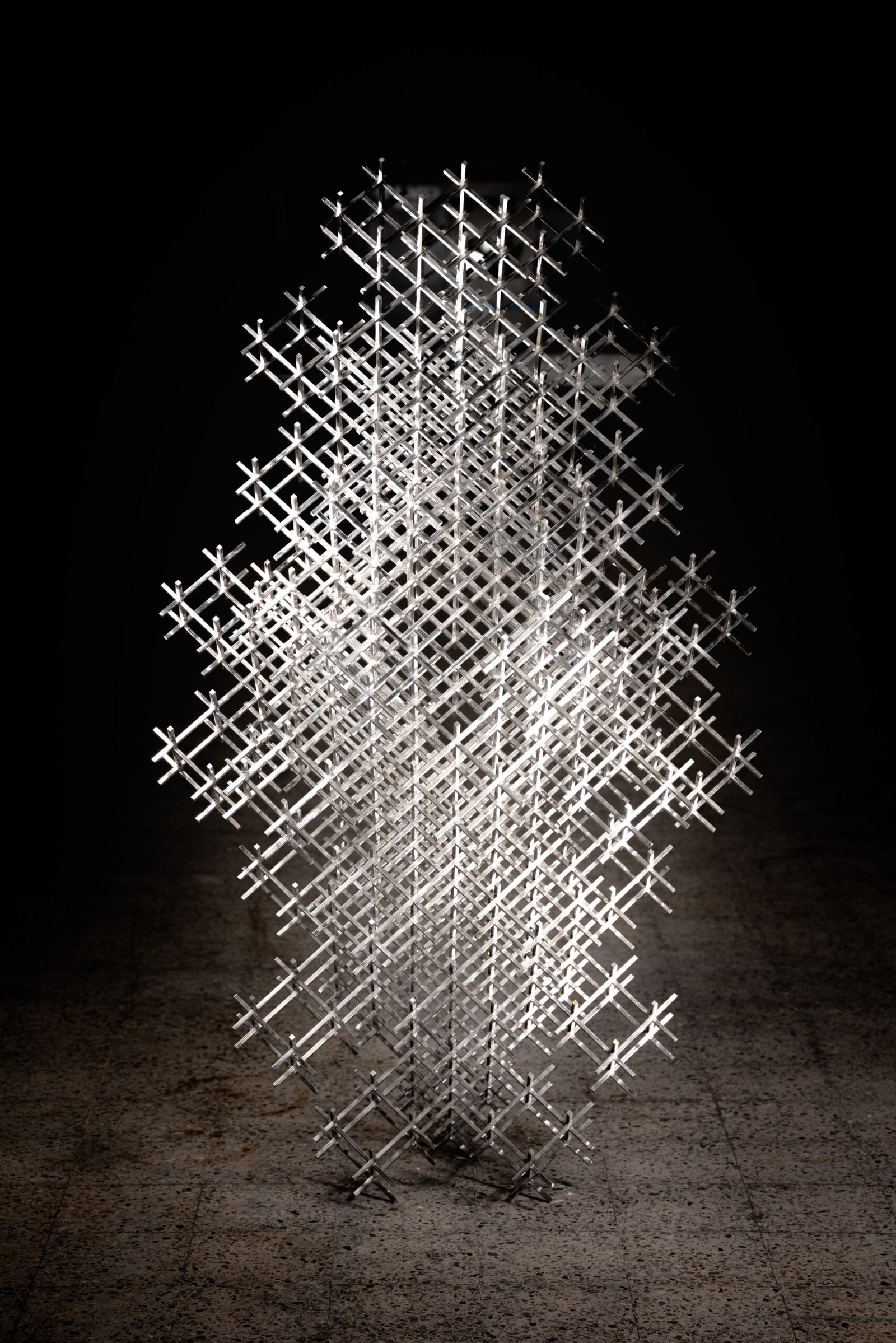
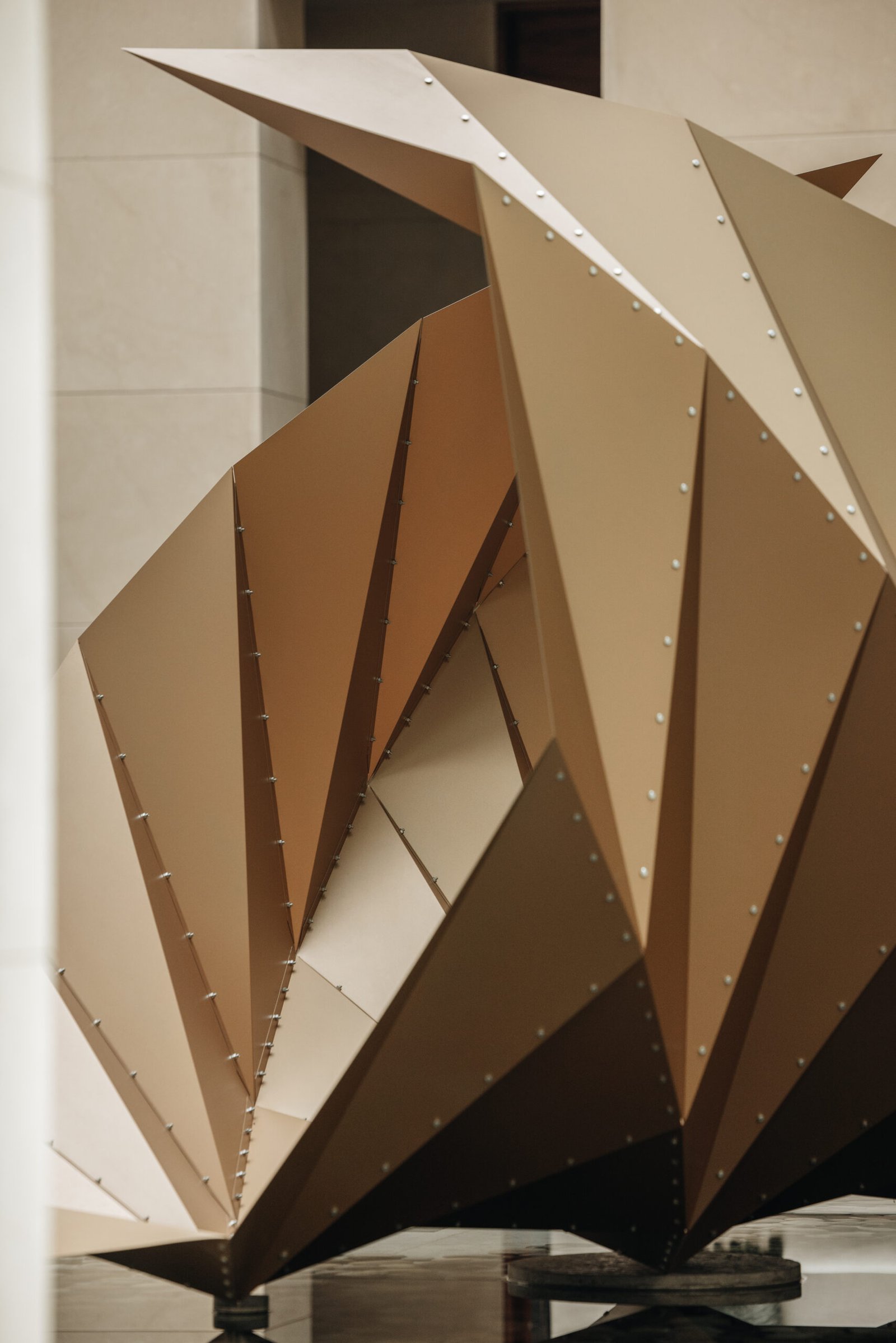
David Troice (El Paso, Texas, 1990) is a contemporary Mexican sculptor specializing in the creation of steel sculptures inspired by geometry and origami. His work merges mathematical precision and material sensitivity to transform an element associated with industrial rigidity into configurations that suggest lightness, buoyancy, and movement.
With a career that includes exhibitions at national and international fairs, Troice establishes an ethical and spatial dialogue with modern traditions, resonating with the Catalan material school and the thinking of Mathias Goeritz.
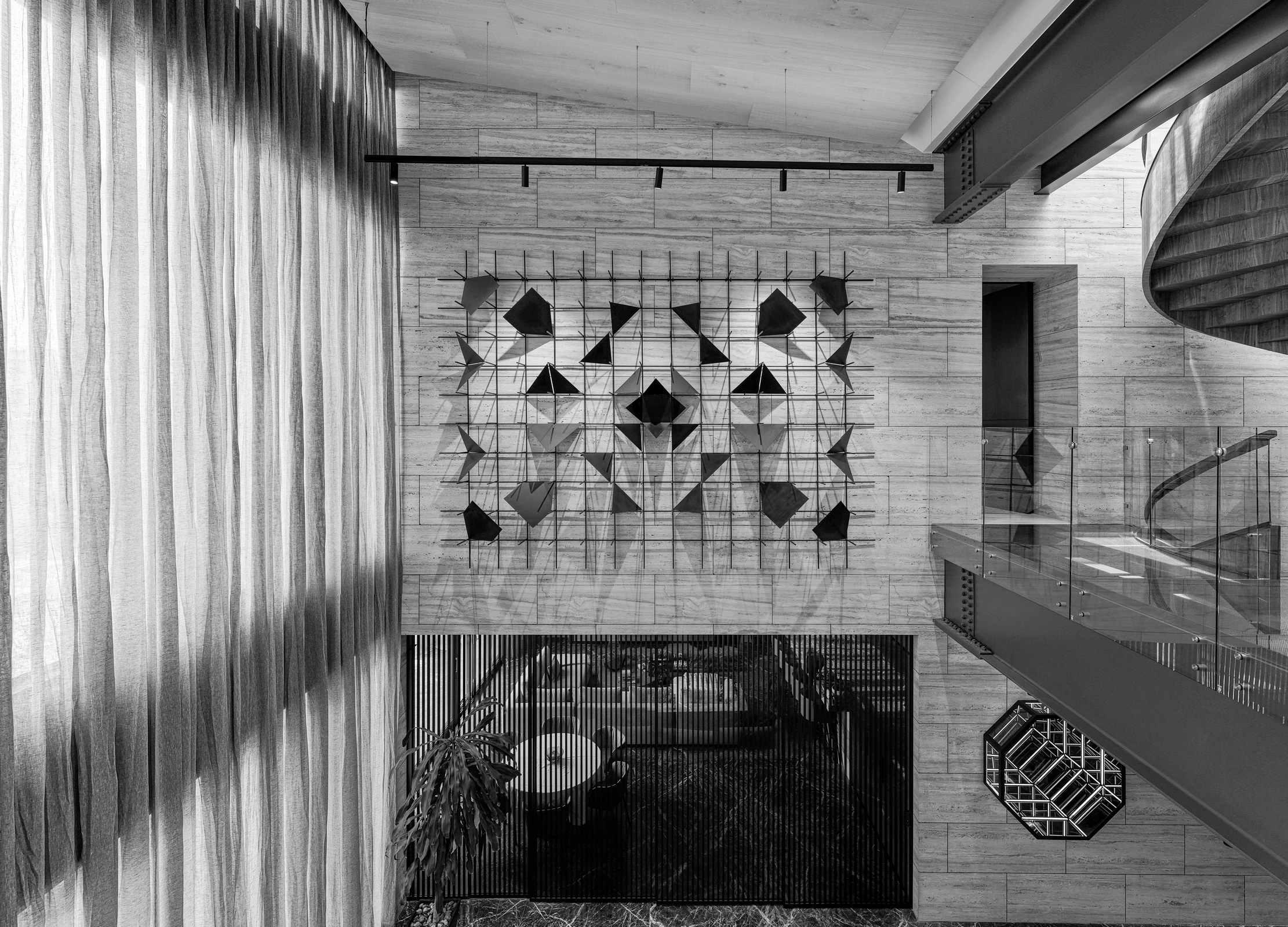
His modular structures and folded surfaces don't function as decoration, but as active systems that reorganize the environment. Through structural tension and balance, Troice proposes spatial experiences where sculpture ceases to be a static object and becomes a stabilized perceptual field.
CONCEPTUAL FRAMEWORK
""Sculpture does not look, but it holds the gaze. It does not express, but it affects and rearranges space.""
CONCEPTUAL GLOSSARY
Non-cultural structural language, prior to representation, that articulates form, matter, and perception.
Material and visual condition in which opposing forces stabilize and produce a sensation of suspension.
Area of the metal where the time of manual labor, folding and material pressure are inscribed.
Ethical relationship with the material based on respect, technical control and a prolonged production process.
FURTHER READING
- Wassily KandinskyOn the spiritual in art
- Umberto EcoThe open work
- Hans-Georg GadamerThe relevance of beauty
- Martin HeideggerArt and space
- Deleuze & GuattariA thousand plateaus
- Rudolf ArnheimArt and visual perception
CATALOGUE OF WORKS
WORK RECORD