 VISUAL ARTIST
KATYA
GARDEA BROWNE
D-STRUCTURES & CHANGING FORMS
BIO & STATEMENT
SEMBLANCE
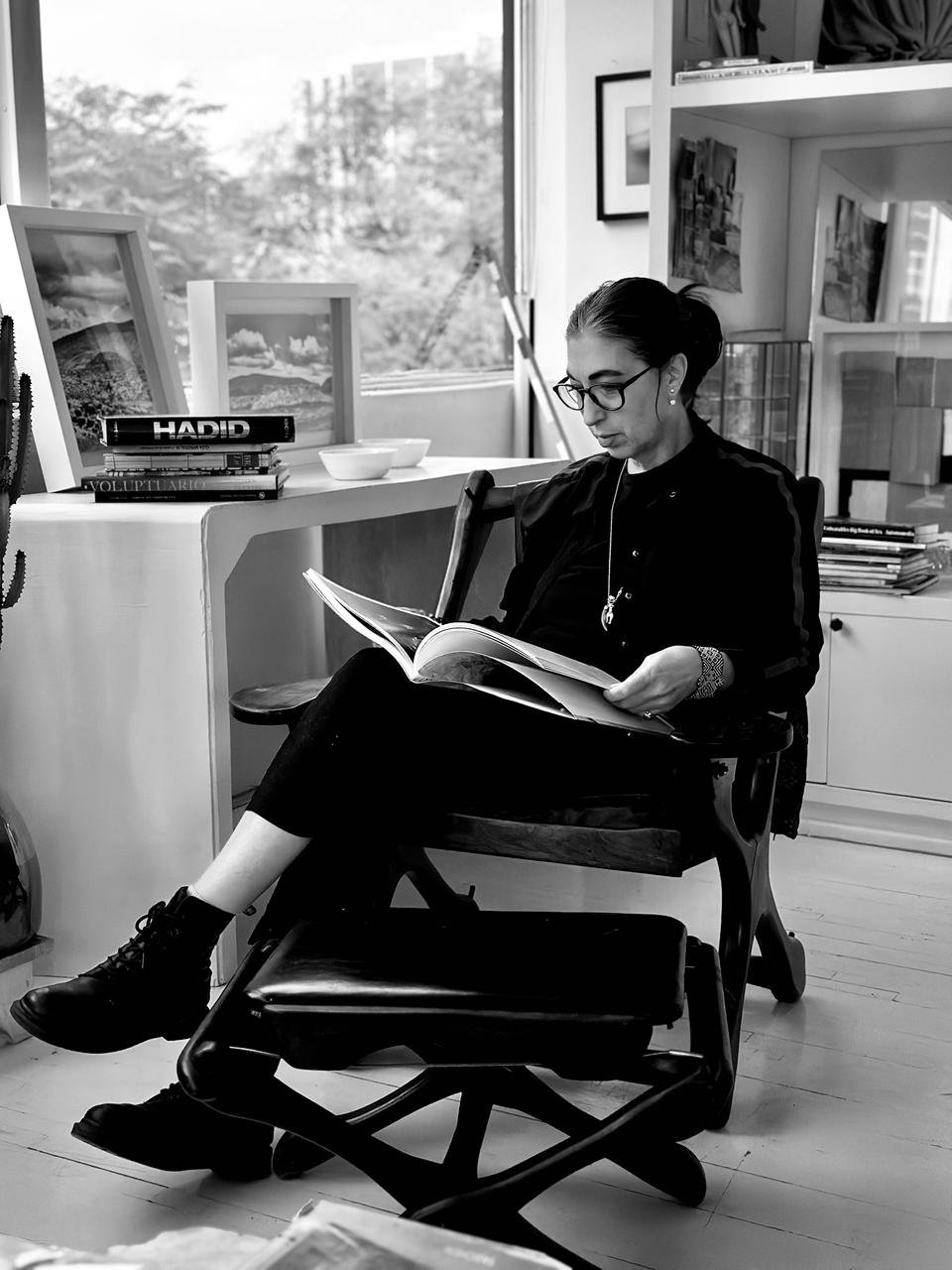
Katya Gardea Browne is a Mexican visual artist with international training, whose practice encompasses painting, sculpture, installation, and video. She studied at the National School of Painting, Sculpture, and Engraving "La Esmeralda," earned a bachelor's degree from the School of Visual Arts in New York, and a master's degree from Yale University.
Her work has developed between Mexico, the United States, and Europe, integrating diverse cultural and spatial contexts. Throughout her career, she has presented her work in solo and group exhibitions in museums, galleries, and experimental spaces.
His practice is characterized by sustained research on form, geometry, scale and perception, understanding the work as a relational system that is activated in the encounter with the body of the spectator.
ARTIST STATEMENT
Katya Gardea Browne's work conceives of form as an unstable and relational phenomenon, existing not autonomously but in interaction with the body, space, light, and time. Her pieces are not presented as closed objects or definitive structures, but as open configurations that demand movement, attention, and perceptual adjustment.
The central focus of her practice is understanding as an aesthetic experience. Understanding does not imply deciphering a hidden meaning, but rather modifying the scale of perception, accepting doubt, and inhabiting the transition. Through precise yet open geometric structures, her work proposes an embodied and temporal perception, where the work unfolds as an event and meaning is always in flux.
THEORETICAL FRAMEWORK
D-Changing Structures and Forms… or when in doubt, zoom out
Katya Gardea Browne's work is part of a sustained investigation into form understood as a relational phenomenon, unstable and dependent on perceptual experience. Far from conceiving of form as a closed, autonomous, or self-referential object, her practice proposes structural systems that only acquire meaning in the encounter with the body, the gaze, space, and time.
Within this framework, the central axis of her work is not representation or abstraction understood as formal language, but rather understanding as an aesthetic, philosophical, and critical category. The central premise is clear: the work is not interpreted, it is understood. Understanding does not equate to deciphering a hidden meaning, but to adjusting perception, modifying the scale of one's gaze, and accepting indeterminacy as a productive condition.
The title "D-Structures and Changing Forms… or when in doubt, zoom out" functions not as a narrative directive, but as an epistemological instruction. Faced with the impossibility of stable formal certainty, understanding is activated through displacement, distance, and changes in scale. In this practice, form is presented not as a fixed entity or a final result, but as an ongoing process.
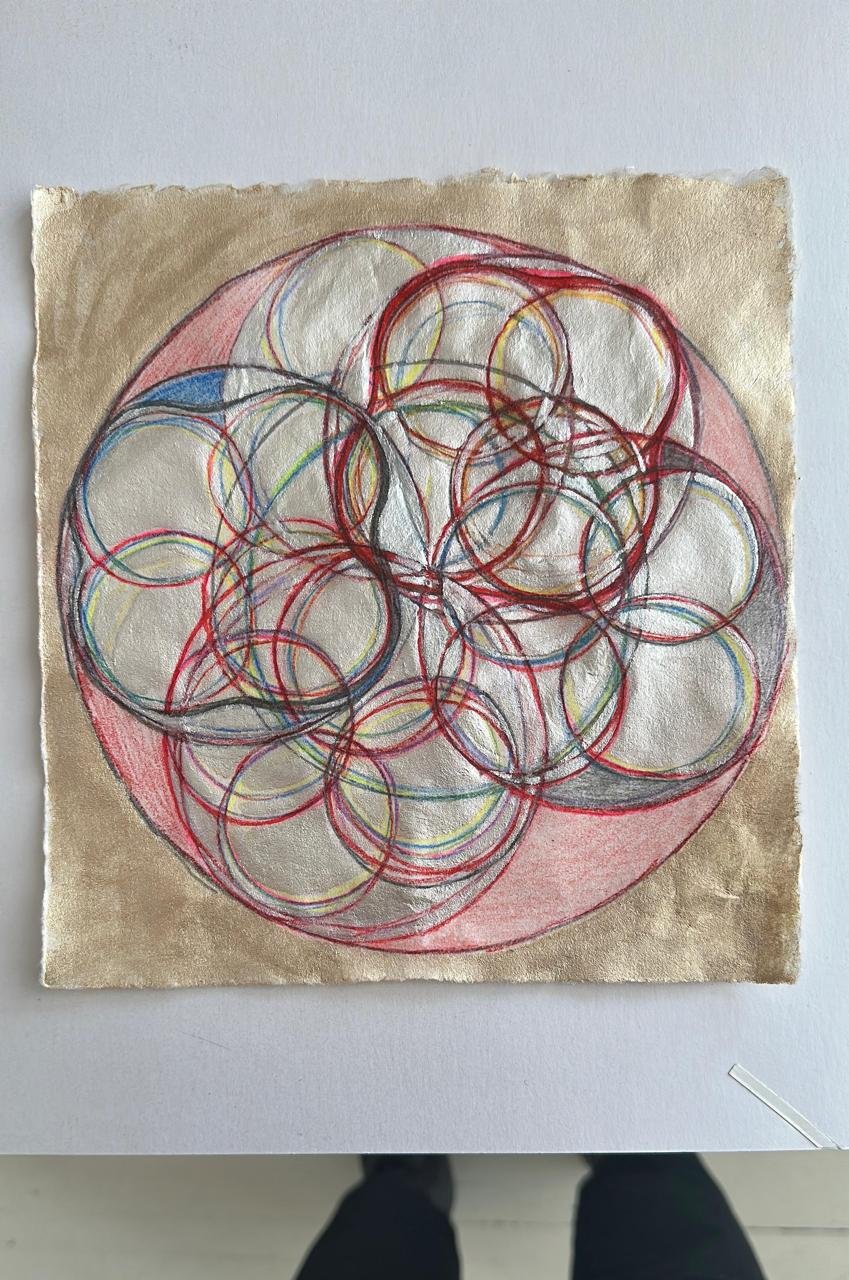
The sculptures, structural paintings, and objects function as open configurations that transform according to the conditions of the environment and the presence of the viewer. Form appears, shifts, fragments, or reorganizes, revealing that its identity is always contingent. It is not something definitive, but rather something that unfolds. Its meaning does not reside in the matter itself, but in the relationship established with the one who perceptually engages with it.
Geometry occupies a central place, but not as a symbol of absolute order nor as a formalist legacy. Here, the structure functions as a precise, yet not closed, system. Constructive rigor does not lead to a single interpretation, but rather enables constant perceptual variations. This tension between exactness and flexibility generates a field where the structure does not impose meaning, but rather keeps it suspended.
The artwork does not dictate experience; it proposes it as a space of continuous adjustment. Aesthetic experience is constructed from an embodied perception. Light, distance, body movement, and point of view introduce variations that prevent immediate comprehension. Time ceases to be an external framework and becomes a constitutive dimension of the work.
The gesture of “zooming out” introduces a fundamental critical dimension. Changing scale doesn't simply mean moving away, but rather reconfiguring the relationship with form. By widening our gaze, the illusion of perceptual control dissolves, and the provisional nature of all visual certainty is revealed. Doubt appears not as a lack, but as an active condition of understanding.
CONCEPTUAL GLOSSARY
Aesthetic and critical faculty that organizes perceptual experience without closing it off. Central axis of the work.
Form conceived as a mutable phenomenon, dependent on the context and the relationship with the spectator.
A structure sustained by constructive rigor that incorporates displacement and transformation as a condition.
Use of geometry as a relational language and not as a closed-order system.
Formal configuration that does not produce a single or definitive meaning.
An aesthetic experience built from the body, movement, and physical presence.
A perceptual strategy that broadens the perspective and destabilizes formal certainty.
Active condition of understanding that drives the aesthetic experience.
The moment when the work happens through the presence of the spectator.
An intermediate state where form is transformed and meaning remains open.
RECOMMENDED READINGS
- Phenomenology of Perception. Maurice Merleau-Ponty. Paris: Gallimard.
- Seeing and Not Seeing. John Berger. London: Penguin Books.
- Critique of Judgment. Immanuel Kant. Berlin: Lagarde and Friederich.
- The Relevance of Beauty. Hans-Georg Gadamer. Barcelona: Paidós.
- The Open Work. Umberto Eco. Milan: Bompiani.
- The space of thought. Gianni Vattimo. Madrid: Cátedra.
- A Thousand Plateaus. Gilles Deleuze and Félix Guattari. Paris: Les Éditions de Minuit.
- Against Method. Paul Feyerabend. Mexico City: Sexto Piso.
CATALOGUE OF WORKS
WORK RECORD
NATURE CULTURES,
XOCHIMILCO 2024-2026
VIDEO INSTALLATION & SOUND ART WITH NIK SPIV
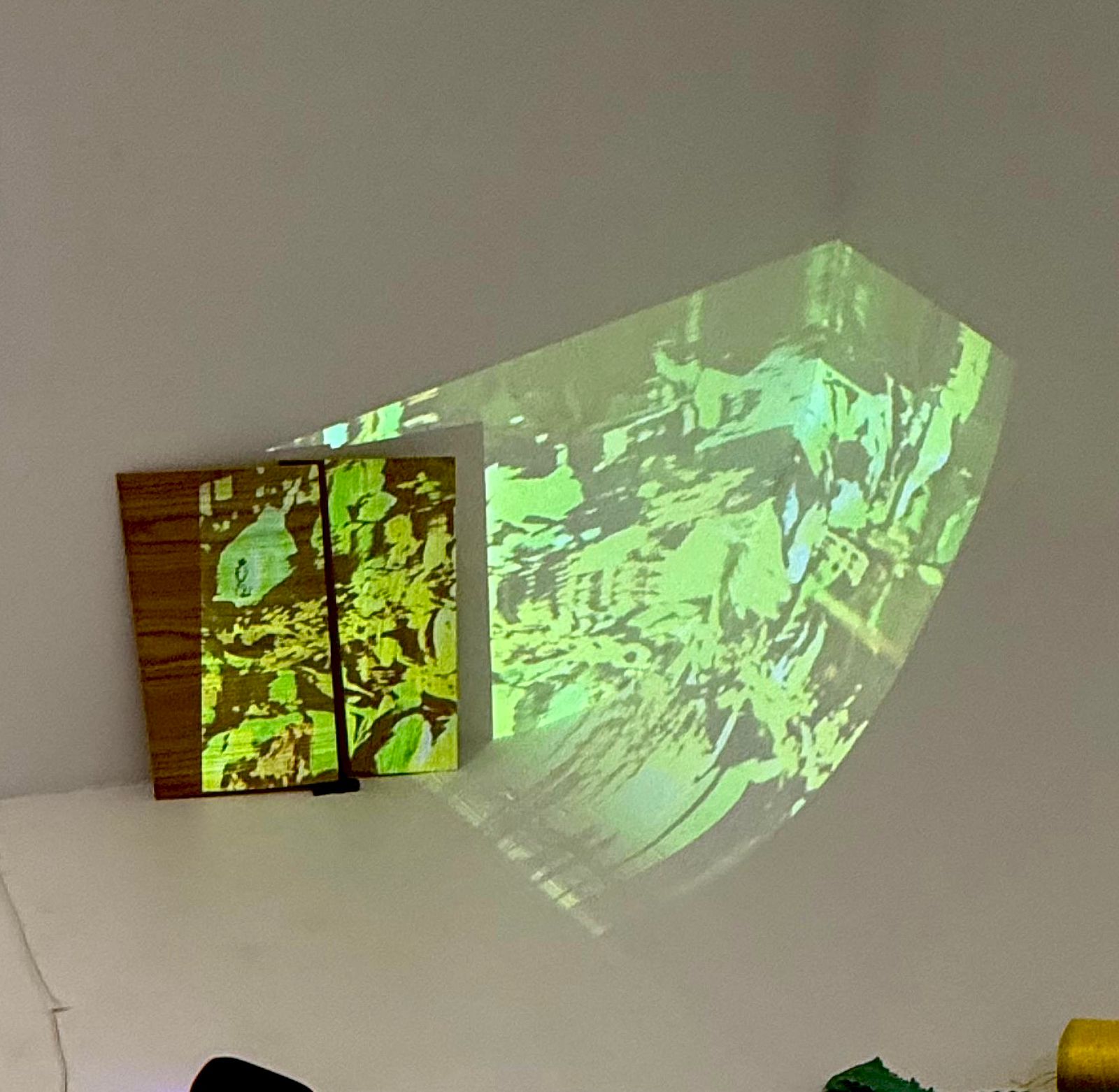
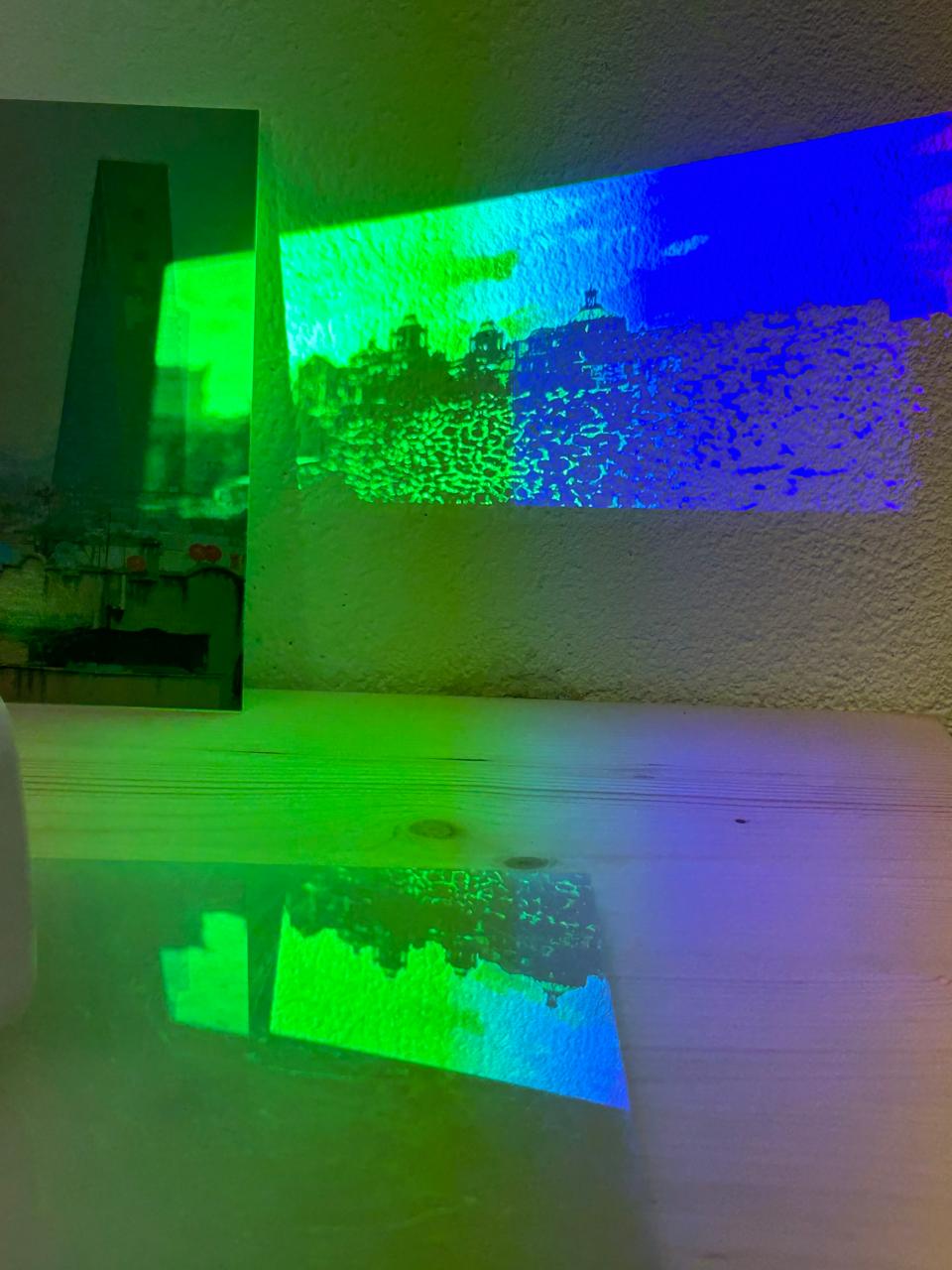
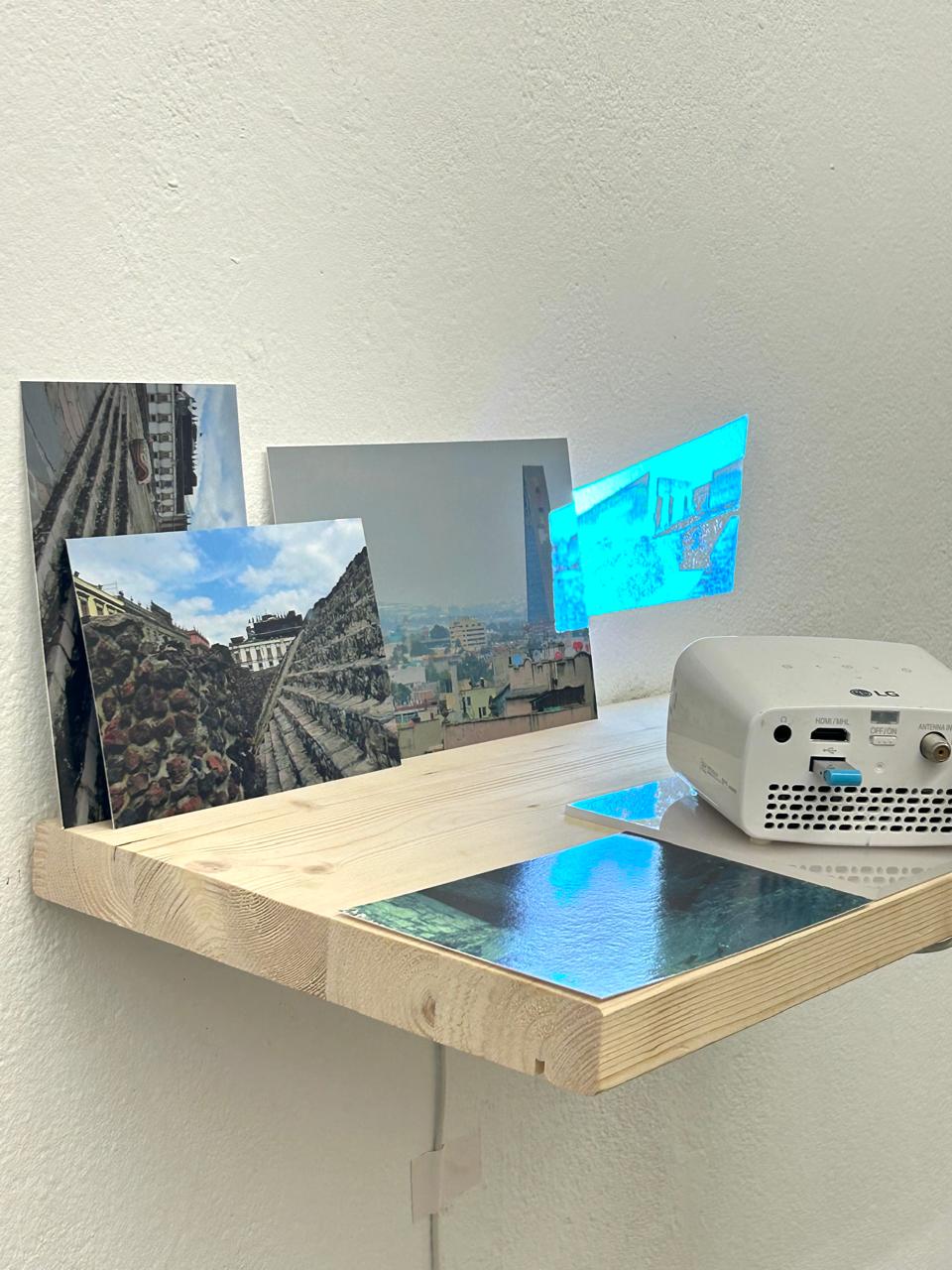
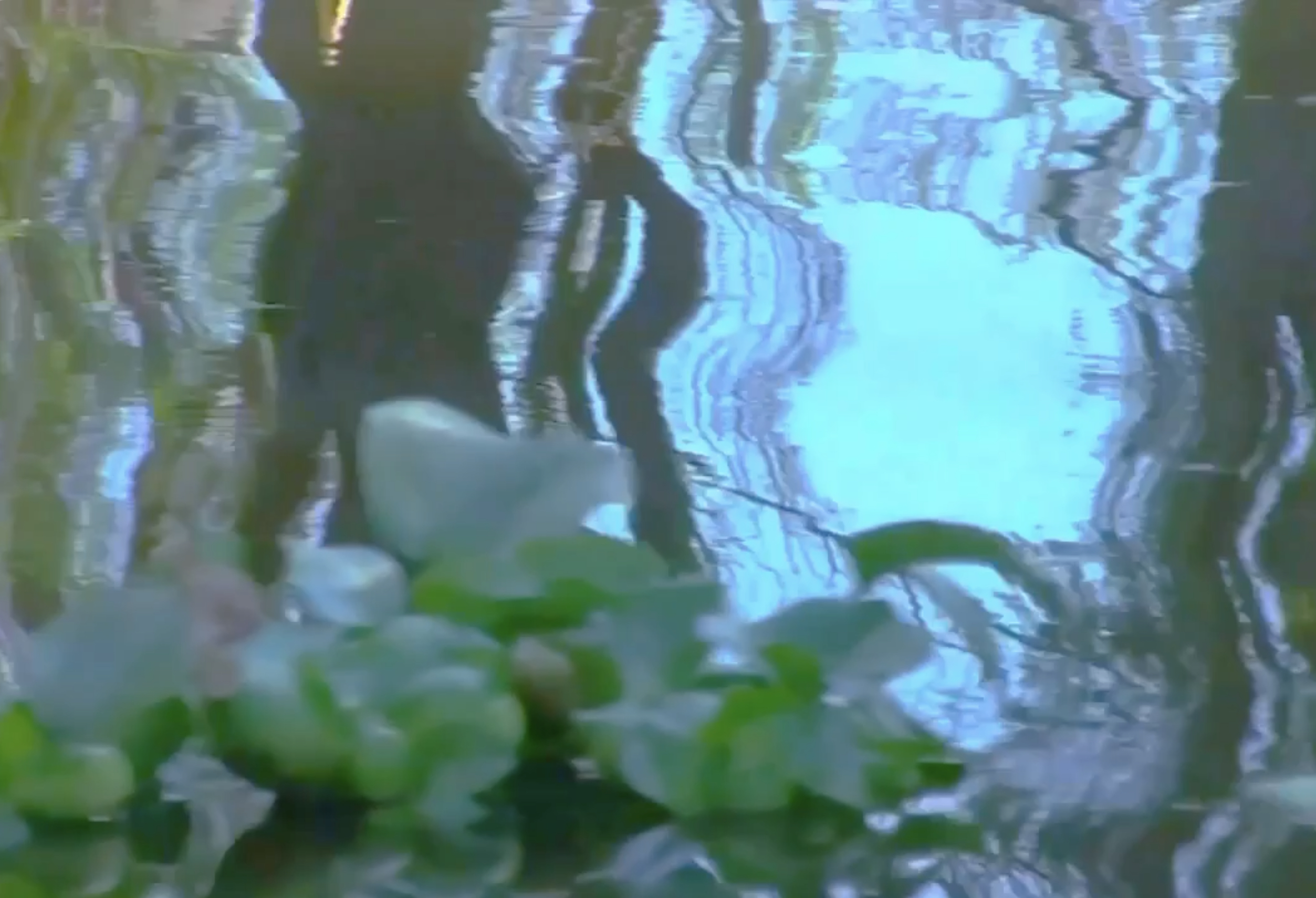
A traveling video and sound installation that brings together images of the floating gardens of Xochimilco and its surrounding urban environment. The work was first presented in Berlin in 2024 at the Rosa Luxemburg Kunstverein as part of "Clubs of the Future".
In its current iteration, the original organic recordings have been digitally processed and synthesized into a psychoacoustic composition. The fragmented structure of the projection reflects both the ecological precariousness of the site and the layered construction of the sound collage.
Over the course of 6 minutes and 6 seconds, image and sound unfold as a unified temporal sequence, evoking a landscape that persists as a living system in an unstable and fragile equilibrium.